Approved
isn't paid.
The credentialing company that stays until you get paid.
Credentialing and payer enrollment for behavioral health, medical and group practices. After the payer says yes, we stay on it until your first payment lands.

What's changing at your practice?
A new provider can't bill a plan until they're enrolled with it. We get their CAQH profile ready, apply to every payer you choose, and chase each application until the payer decides. Then we stay on it through payment setup.
Book a call about a new providerBehavioral health first. Every provider a plan will pay.
If a plan pays for the service, we'll credential the person who provides it, with commercial plans, Medicare, Medicaid and TRICARE.

 Group practicesBehavioral health groupsPayer contracts in your practice's name, for every clinician you hire, including the ones a platform won't cover. Behavioral health credentialing →
 Therapists and counselorsLCSW · LPC · LMFT · PsychologistsMoving off a platform or cash pay and onto your own contracts.
 PsychiatryPsychiatrists · Psychiatric nurse practitionersSolo prescribers, or a therapy group adding one.
 Peer support, doulas and community health workersMedicaid enrollmentIn states where Medicaid pays for the role, we enroll you like any other provider.
 Medical practicesPrimary care · Pediatrics · SpecialtyPractices without a credentialing department of their own.
A person reads every application. The software keeps track of the rest.
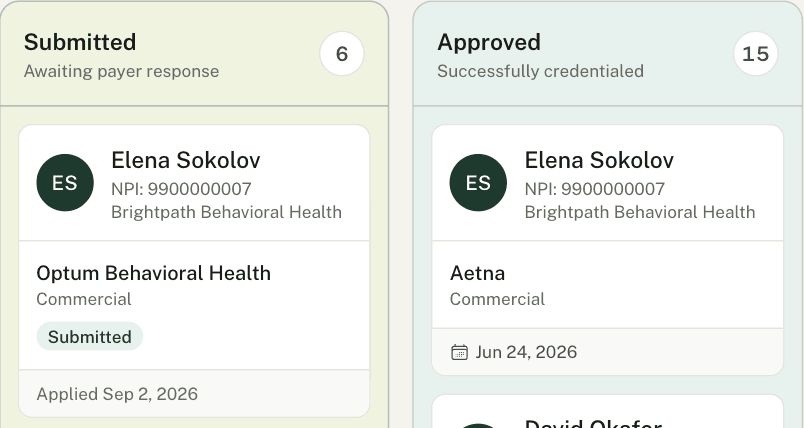
The enrollment pipeline in Lanyard, shown with demo data.
See where every application stands, without calling us.
Your team logs in and sees the same thing we see: every provider, every payer, what's done and what's waiting.
Log in to the portal →- LiveYour practice portal
Every provider, every payer and where each application stands.
- LiveDocuments and e-signatures
Providers upload licenses and sign forms in the portal. Reminders go out before anything expires.
- LiveSaved portal logins
The payer and CAQH logins your team needs, in one secure place.
- PendingEHR and scheduling connections
Keeps your provider list in step with the tools you already use.
- ComingLanyard API
For EHRs, staffing firms and other partners. Ask us what's available now.
The payer owns this clock. So we won't quote you an approval date.
Most payers take four to six months to review. Anyone who promises a date is guessing. We'll tell you what's still waiting and who it's waiting on.
In-network is nice.
In the bank is better.
After a payer says yes, your deposits still have to be set up. Until they are, a provider can see patients and collect nothing. Plan on about 30 more days.
What is waiting costing you?
Put in your own numbers. It's the money a provider earns while they wait to be paid.
Example numbers to start. Change them to your own; nothing is saved or sent.
Then we keep you paid.
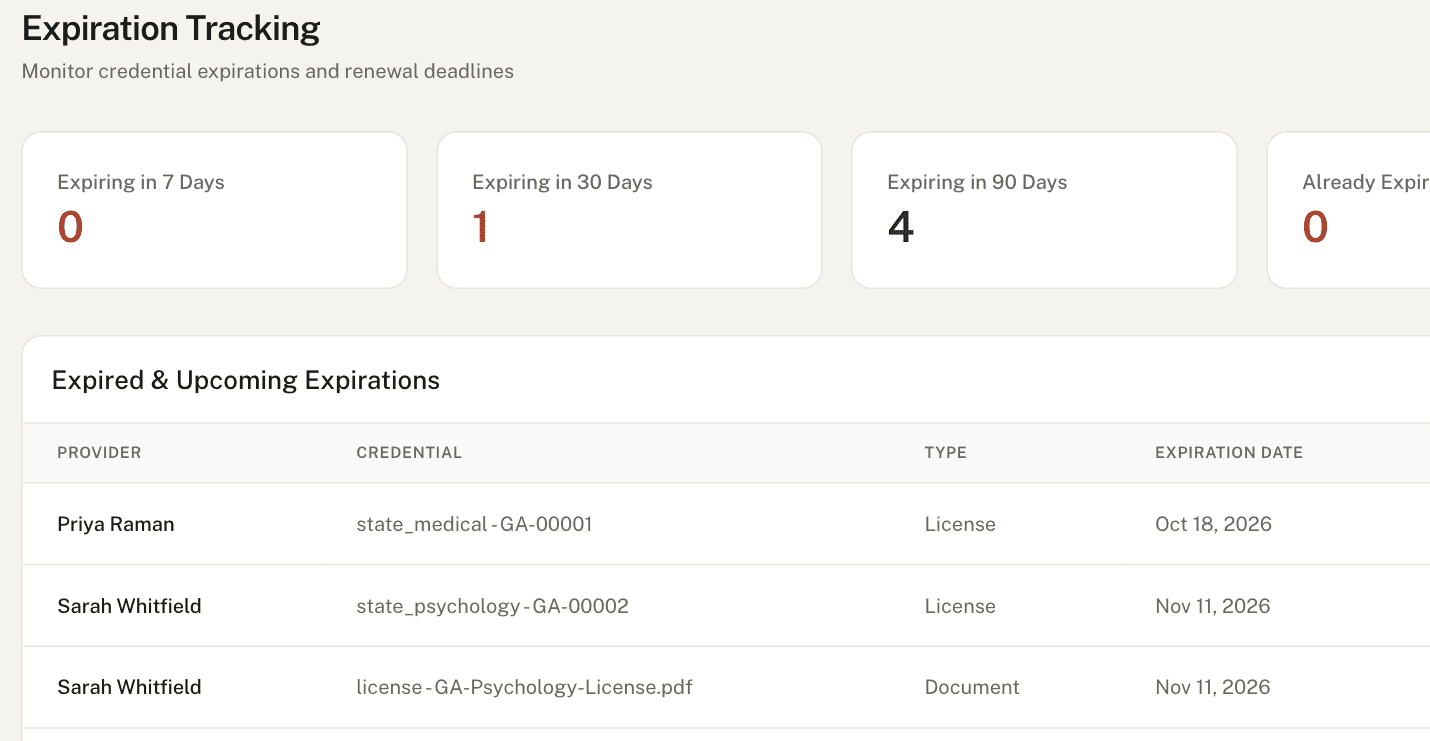
CAQH reattestation, license and certification expirations, directory details. Miss one and a payer can stop paying without telling you. We remind you well before anything lapses.
"Care starts when a provider can be paid. That's why I built Lanyard, and why we don't stop at approval."

Common questions
What does Lanyard Health do?
Lanyard Health is a credentialing and payer enrollment company for behavioral health and medical practices, group practices and clinics. We prepare and submit provider applications, follow up with payers until they decide, and keep providers credentialed with reattestation and expiration tracking. After approval, we stay on each provider until the first payment arrives.
Can you help me leave Headway and get my own insurance contracts?
Yes. We apply to each payer under your own NPI and tax ID, so the contracts belong to you and stay with you if you change how you work. You can keep using the platform while your own applications are pending. More in Headway vs. going direct.
Do you handle Medicaid enrollment for behavioral health?
Yes. We enroll behavioral health providers with state Medicaid programs and Medicaid health plans. That includes peer support workers, doulas and community health workers in states where Medicaid covers the role.
Do you handle Medicare and TRICARE enrollment?
Yes, where providers are eligible to enroll. We enroll providers with Medicare and TRICARE alongside commercial plans and Medicaid. Since January 1, 2024, that includes marriage and family therapists and mental health counselors, who can now bill Medicare on their own.
How long does provider credentialing take?
Most payers take four to six months to enroll a provider, and most of that is the payer's review. After approval, payment setup (EFT, ERA and EDI enrollment) takes about 30 more days. We won't quote an exact approval date, because the payer controls that clock.
Why doesn't approval mean getting paid?
Approval means the payer accepted the provider into its network. Before claims pay, the practice still needs EFT for deposits, ERA for payment statements, EDI enrollment with its clearinghouse, and payer portal access. Until those are set up, a provider can see patients and collect nothing.
Do you handle payment setup after approval?
We stay on it. Today we track each step and chase the payer, and we set up what we can by hand. A full payment setup service is being built now.
What's the difference between credentialing and payer enrollment?
Credentialing verifies a provider's education, licenses and work history. Payer enrollment is the application to join an insurance company's network so the provider can bill that plan. Most providers need both, with a separate enrollment for each payer.
Who is Lanyard Health for?
Practices, provider groups and clinics without a credentialing department of their own: behavioral health groups, therapists, psychiatry, primary care, pediatric and specialty practices, plus peer support workers, community health workers and doulas where Medicaid pays for the role. Most come to us when something changes. They're opening, hiring a provider, starting to take insurance, or adding a payer they don't take yet.
Do you handle CAQH?
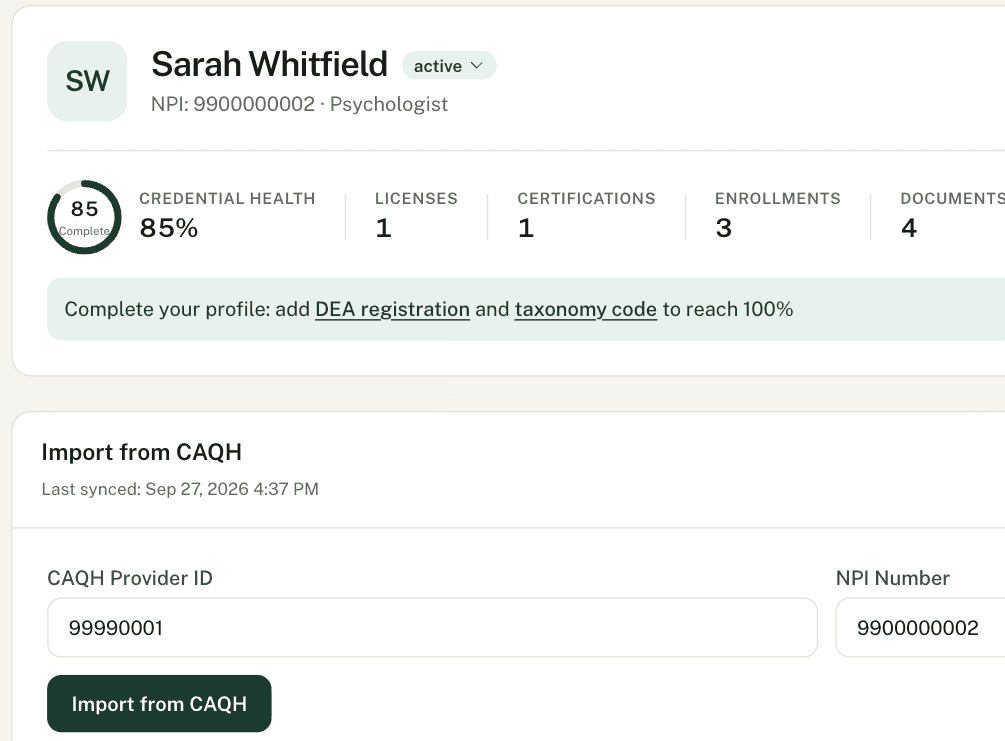
Yes. We pull provider details from CAQH ProView to fill applications, and we track reattestation so a provider's profile doesn't lapse. A lapsed CAQH profile can stall enrollments with payers that rely on it.
Tell Lanyard what changed.
Two quick questions, then pick a time. You'll get a straight answer on how long it takes and which parts the payer controls.